setlog
- 2.9
- Rating
- 1.00M
- Installs
- Free
- Price

 Analysis by App-foxy
I approached setlog as a social app for people who want a more focused way to stay connected during the same day. Its short store description gives very little away, so the real question is not whether it sounds attractive, but whether a lightweight social space can offer something more useful than the familiar mix of messaging, feeds, and group chats. My impression is cautiously positive: the idea feels easy to understand, but the first release also feels like something that needs time, regular use, and clearer differentiation before it can become an essential part of a phone.
The app comes from newchat and is free to use, which makes trying it relatively simple. It is listed for Teen users and is available on devices running Android or iOS software version 10 or later. That broad compatibility matters for a social tool because people are unlikely to move a whole group of friends onto an app that only works on newer phones. At the same time, the current version is still 1.0, so I would treat it as an early product rather than a finished replacement for every social service already on your phone.
How setlog feels in everyday use
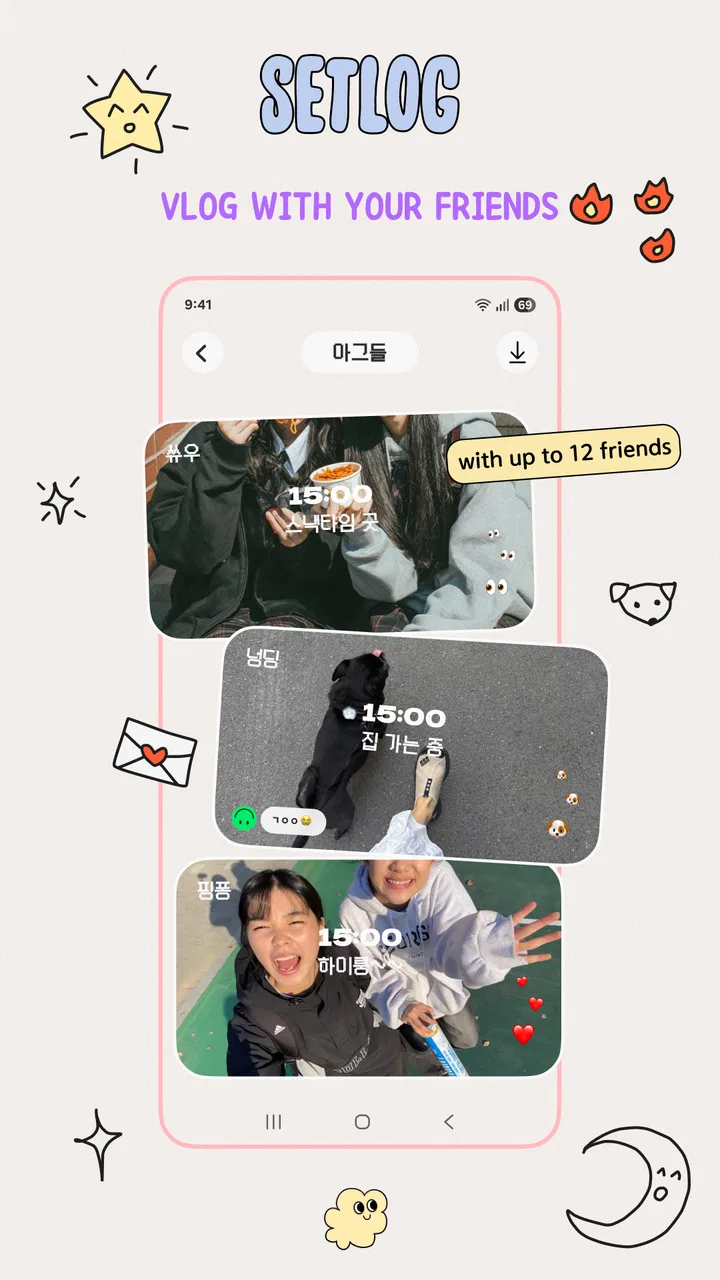
The most appealing part of the concept is its emphasis on the same day rather than on an endless archive of posts. That gives the app a more immediate purpose. Instead of opening a platform simply because there is always more content to scroll through, I can imagine opening this one to see what is happening with the people I actually care about today. That difference sounds small, but it changes the kind of attention the app asks from me.
You May Also Like

 AccuWeather: Weather Radar
AccuWeather Review: A Quick, Clear Forecast for Everyday Decisions
For everyday plans, the best forecast is the one you can understand quickly. AccuWeather makes rain timing, radar, and local conditions easy to act on, with a few trade-offs.

 Hill Climb Racing
Why Hill Climb Racing Still Turns Crashes Into One More Run
A tiny car, a bumpy hill and one more upgrade: Hill Climb Racing keeps resurfacing because its simple chaos makes every near-miss feel personal.

 AliExpress - Shopping App
AliExpress Makes Global Shopping Feel Personal, but Shoppers Bear the Risk
AliExpress turns a global marketplace into a pocket-sized discovery engine. Its reach is useful, its shopping loop compelling, and its trade-offs easy to miss.

 Lords Mobile: Kingdom Wars
Lords Mobile Is a Kingdom-Building Routine, Not a Quick Match
A case-by-case verdict on the building, battles, device demands, and social commitments that make Lords Mobile rewarding for some players and exhausting for others.

 PDF Scanner app - TapScanner
TapScanner Makes Paperwork Easier to Capture, Check, and Share
TapScanner makes scanning with a phone feel less like a rescue operation and more like a dependable step in getting work done. Its capture tools are useful, though not flawless.

 Block Blast!
 Shows How Much a Puzzle Game Can Leave Out
A quiet grid game shows why puzzle players increasingly value instant clarity, repeatable skill and low-pressure play—and where the genre still needs to catch up.
More From Our News Desk
View All News


In practice, this makes the app easier to imagine as a companion to ordinary routines. A group of friends could use it to keep track of a shared day, relatives could use it to exchange small updates without building a permanent public timeline, and classmates could use it around a particular day or activity. The value is strongest when everyone involved agrees on that rhythm. If only one person posts while the others continue using their usual messenger, the experience quickly becomes less social and more like another place to check.
I also like the possibility of using it for low-pressure contact. Traditional messaging often creates an expectation of an immediate reply, while a public social feed can encourage polished updates or attention-seeking posts. A same-day format sits somewhere between those extremes. It can support quick moments, small observations, and casual participation without demanding a carefully written message every time.
That said, the app does not automatically solve the biggest problem facing a new social network: people need a reason to return, and they need friends there. A clean idea is not enough by itself. The experience depends heavily on whether the people I want to reach are willing to install it, learn its habits, and use it consistently. For a solo user, the first session may be pleasant but limited. For a small group that adopts it together, the same design can become much more meaningful.
A realistic day with the app
Imagine a group of friends planning a day out. One person shares a quick update in the morning, another adds a change to the plan around lunchtime, and someone else posts a small moment from the afternoon. Nobody needs to turn the day into a formal event or maintain a long conversation. The app becomes a shared record of what is happening now, with enough context to keep everyone involved.
That scenario shows where the service could be more comfortable than a busy group chat. In a messenger, important details can disappear beneath jokes, reactions, and unrelated replies. In a conventional social feed, the same updates may feel too public or too permanent. A day-centered space can keep the focus narrow. The trade-off is that it may be less useful for information that needs to remain easy to find later, such as addresses, documents, decisions, or long-running plans.
My practical advice is to begin with a small circle rather than inviting everyone I know. A shared routine is easier to establish with three or four people who already have a reason to stay in touch. I would also agree on what the space is for before relying on it. Is it for photos, quick status updates, plans, or general conversation? That simple decision can prevent the app from becoming another empty feed.
Where it differs from familiar social apps
Setlog is not best understood as a direct substitute for every social platform. The usual alternatives are built around different habits. Messaging apps are better when I need a direct answer, a searchable conversation, or a dependable place for practical details. Large social networks are better when I want broad discovery, public discussion, creator content, or an established audience. Photo-sharing services are stronger when presentation and visual history matter more than the immediate day.
This app’s likely advantage is its narrower sense of time. A user who dislikes permanent feeds may appreciate that focus, while someone who wants a rich archive of memories may find it restrictive. The same design choice can feel refreshing in a short-lived group activity and inconvenient for a family that wants to revisit updates months later. I would choose it for shared immediacy, not for comprehensive communication.
There is also a social trade-off in keeping things lightweight. Less structure can make participation feel natural, but it can also make the app harder to understand at first. Established services teach users what to do through familiar patterns: send a message, follow an account, publish a post, or join a group. A newer format needs to explain its purpose through use. If the opening experience does not make that purpose obvious, people may leave before their network has had a chance to form.
What the current release tells me
The current release is version 1.0, and that is important context when judging the product. I would not expect the same depth, refinement, or social maturity that I get from services that have been shaped by years of feedback. The early version can still be worthwhile, but I would evaluate it as a foundation. Smooth onboarding, clear interaction rules, reliable access to the day’s activity, and a comfortable way to manage participation matter more here than a long checklist of extras.
The release date is April 22, 2026, placing the app at the beginning of its public life. That makes the present experience more useful as a starting point than as a final verdict on the idea. A first release can demonstrate the central direction without revealing how well the developer will respond to real communities, awkward edge cases, or changing user expectations.
For existing users, the main effect of this early stage is uncertainty. A person who already has a working setup in a messenger or established social network may not see enough immediate benefit to move everything. On the other hand, early adopters can influence the culture before the app becomes crowded with unrelated content. If I were joining now, I would do so because I liked the focused concept, not because I expected a fully mature ecosystem.
The app has already reached over a million installs, while its average rating is around 2.9 from roughly three thousand six hundred ratings. Those figures suggest that there is meaningful curiosity around the product, but also a noticeable amount of dissatisfaction or friction among people who tried it. I would not read the rating alone as proof that the concept fails. For a new social app, disappointment can come from unclear expectations, missing network effects, or technical rough edges as much as from the central idea.
Small habits that make the experience better
The first useful habit is to treat a shared day as a deliberate space, not as a replacement for every conversation. I would keep urgent requests and sensitive details in a trusted messenger, then use setlog for the lighter updates that benefit from being seen together. This division prevents the app from being judged unfairly for tasks it was not designed to handle and keeps the day-focused stream from becoming cluttered.
The second is to create a clear starting moment. If a group joins at random times without a common reason, the service may look empty or confusing. Beginning with a trip, a birthday, a study day, or a weekend plan gives everyone an immediate reason to contribute. The app’s value then comes from shared timing rather than from the number of people in a contact list.
The third is to resist overposting. A same-day service can become tiring if every minor action turns into an update. I found the concept more appealing when I imagined it as a selective window into a day rather than a live surveillance log. A few meaningful contributions are easier to follow and more pleasant to revisit than a constant stream of fragments.
A fourth consideration is device compatibility. Since the minimum operating system is version 10, people with older supported devices have a better chance of joining the same group. That is useful when introducing the app to relatives or mixed-device communities. Still, compatibility alone does not guarantee a consistent experience; the group’s willingness to use the app remains the deciding factor.
Who should try it, and who should skip it
I think the app is most suitable for small groups that want a shared, time-limited social space. Friends organizing an outing, families exchanging daily moments, and people who prefer casual updates over polished public posts are the clearest audience. It may also suit users who feel overwhelmed by algorithmic feeds and want a simpler reason to open a social app.
I would be more hesitant to recommend it to someone who needs dependable one-to-one communication, extensive search, long-term records, or a large audience. A conventional messenger is the safer choice for urgent coordination. A mature social network is more practical for discovery and public reach. Someone who mainly wants private photo storage or a permanent journal may also find the day-centered approach too temporary or too dependent on other participants.
Teen users should also think about the social setting in which they plan to use it. The age classification allows Teen use, but that does not remove the need for sensible boundaries. I would only join shared spaces with people I recognize, avoid posting information that reveals unnecessary personal details, and review the audience for each update before treating the app as casual by default. Those habits are especially important in any service built around frequent sharing.
The gaps I would want addressed
The largest remaining gap is differentiation. The idea of bringing people closer during the same day is understandable, but the app needs to make that benefit immediately visible. If the first experience feels like a thinner version of a messenger or a smaller social feed, users will naturally return to the tools where their contacts already are. The product needs a strong reason for a group to choose this format instead of simply creating a chat.
Another concern is continuity. A day-based experience can be wonderfully focused, yet users may still want to find an important update later. The balance between temporary attention and useful history will be crucial. Too much history could recreate the clutter the app is trying to avoid; too little could make shared moments feel disposable. I would watch how the product handles that tension as it develops.
There is also the question of community health. A smaller social environment can feel calmer, but it can become uncomfortable if participation rules are unclear or if unwanted contact interrupts the experience. Clear controls, understandable reporting, and sensible privacy choices would be especially important for an app whose appeal depends on feeling closer rather than more exposed.
Finally, the rating around 2.9 deserves attention from anyone deciding whether to make the app central to their routine. I would test it with a limited group first, rather than asking an entire community to abandon an established service. That approach keeps the cost of experimentation low and gives me a fair way to judge whether the app adds something genuinely useful.
What I would watch as the product evolves
Because this is an early release from newchat, I would pay close attention to whether future updates make the core experience clearer instead of simply adding more social features. The best direction would be one that strengthens the same-day identity: easier group participation, less confusion about what belongs in a shared day, and better control over how people stay connected without turning the space into another noisy feed.
I would also look for signs that existing users are being supported rather than left to rebuild their habits after each change. A social app earns trust through consistency. If people can understand how their shared spaces work and feel confident that their contributions will remain appropriately visible, they are more likely to invite others. That matters more than a long list of new buttons.
My current verdict is that setlog is an interesting social experiment with a clear emotional goal but an early, unproven position in a crowded category. It is free, accessible on relatively older operating systems, and easy to test without committing money. However, the modest average rating and the demands of building a network mean I would recommend a trial with a small, motivated group rather than an immediate full switch.
My recommendation is simple: try it when your group has a specific day to share, not when you are looking for a universal replacement for messaging and social media. In that setting, the focused format could make ordinary updates feel more connected. Outside it, the app may struggle to justify another place on your phone until its identity, reliability, and long-term usefulness become clearer.
FAQs for setlog
01What is Setlog, and how does it work?
Setlog is a productivity app designed to help users organize and manage their tasks effectively. It allows you to create task lists, set reminders, and track progress. With its intuitive interface, you can easily add, edit, and prioritize tasks, ensuring you stay on top of your daily responsibilities.
02Is Setlog available for both Android and iOS devices?
Yes, Setlog is available for both Android and iOS platforms. You can download it from the Google Play Store for Android devices and the Apple App Store for iOS devices. This cross-platform availability ensures that you can sync your tasks across multiple devices seamlessly.
03Are there any in-app purchases or subscription fees?
Setlog offers a free version with essential features to get you started. However, there are in-app purchases and subscription options available that unlock advanced features like custom themes, additional task categories, and enhanced collaboration tools, providing a more personalized and comprehensive experience.
04How does Setlog ensure the security of my data?
Setlog employs robust security measures to protect your data, including encryption and secure cloud storage. Your information is safeguarded against unauthorized access, and regular updates ensure the app complies with the latest security standards, providing peace of mind for users concerned about privacy.
05Can Setlog integrate with other productivity tools and apps?
Yes, Setlog offers integration with various productivity tools such as Google Calendar, Microsoft Outlook, and Trello. This allows users to streamline their workflow by syncing tasks and deadlines across different platforms, making it easier to manage all your projects in one place.
Pros
- User-friendly interface with intuitive navigation.
- Real-time syncing across multiple devices.
- Customizable notifications for key updates.
- Secure data encryption ensures privacy.
- Seamless integration with other productivity apps.
Cons
- Limited offline functionality in free version.
- Occasional syncing delays reported by users.
- Advanced features require a subscription.
- No dark mode option available yet.
- Initial setup can be time-consuming.

setlog
Gallery